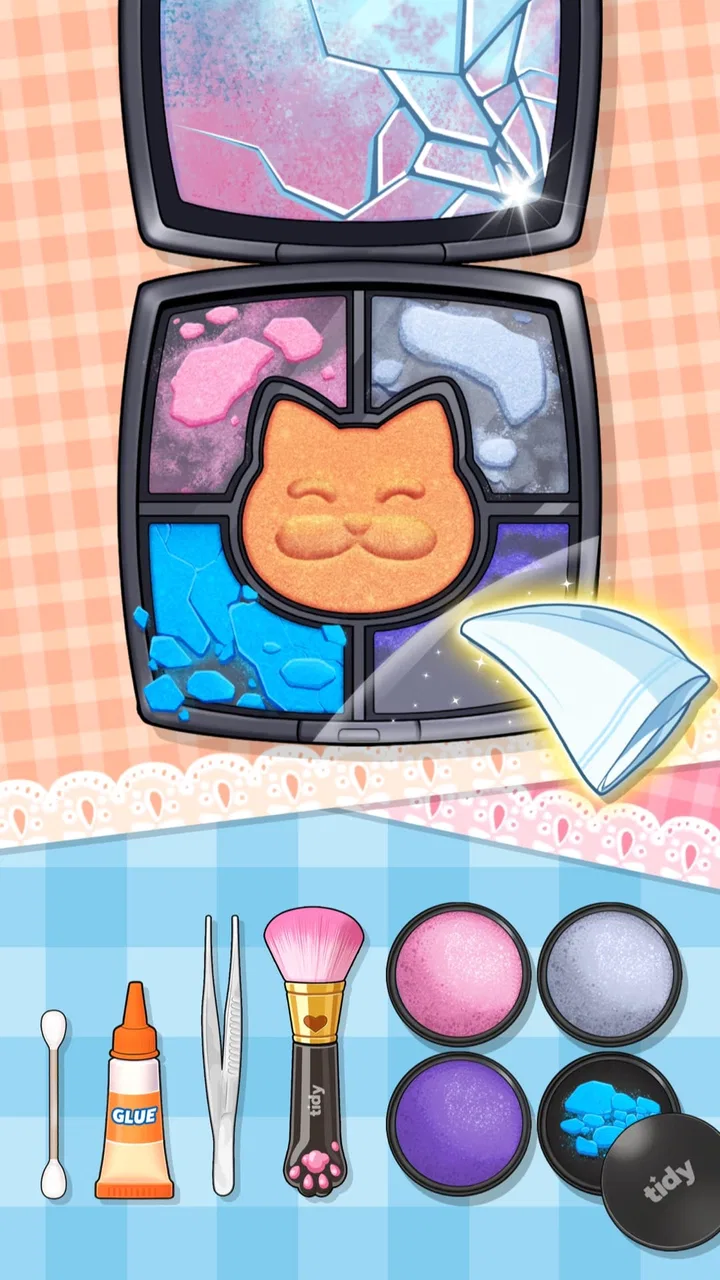
SatisPuzzle: Tidy Up
- 4.5
- Rating
- 10.00M
- Installs
- Free
- Price

 Analysis by App-foxy
I opened SatisPuzzle: Tidy Up expecting a simple casual game, and that is exactly where its appeal begins. It focuses on the small satisfaction of putting a virtual space in order, so the experience feels closer to a short mental reset than to a demanding gaming session. I can play for a few minutes, make visible progress, and stop without feeling that I have abandoned a complicated story or a long competitive match.
The game comes from Stella Joy Studio and is free to install. It is aimed at Everyone, which fits the gentle presentation and straightforward idea. The store summary describes satisfying games and virtual cleaning, but the useful distinction in practice is how quickly the central task becomes understandable: look at the scene, notice what feels out of place, and work through the clutter until the space feels complete.
That makes it an easy recommendation for someone who enjoys casual organizing games, visual puzzles, or relaxing activities that reward attention rather than speed. It is less suitable if you want deep strategy, character development, or a large world to explore. I would also avoid approaching it as a serious home-design simulator. Its pleasure comes from completing contained tidying challenges, not from managing a detailed renovation project.
You May Also Like

 Google Keep - Notes and lists
Google Keep’s Quiet Growth Shows the Appeal of Simpler Notes
As mobile work gets busier, Google Keep keeps winning a simple contest: capture a thought quickly, find it later, and get on with the day.

 Blood Strike: 2.5 Anniversary
Blood Strike’s Loadouts Turn Every Drop Into a Tactical Gamble
A close look at Blood Strike’s custom loadouts: how fast access to signature weapons reshapes its battle royale rhythm, rewards preparation, and narrows the gap between fights.

 Pandora - Music & Podcasts
Pandora’s Music Is Easy to Start, but Harder to Recover
Pandora’s strength is its low-effort path from a seed to a station. Its weak spot is how much confidence it asks you to place in connection, setup, and quiet recovery.

 8 Ball Pool
 Is Built on Rivalries, Rematches, and Routine
A close look at the rivalries, rematches, shared routines, and unanswered safety questions that turn a quick pool match into a persistent mobile community.

 Samsung Music
’s Quiet Strength Is Playing What You Already Own
Its reach comes less from spectacle than from dependable access to a personal library. That simplicity is both the app’s strongest retention engine and its ceiling.

 AccuWeather: Weather Radar
AccuWeather Review: A Quick, Clear Forecast for Everyday Decisions
For everyday plans, the best forecast is the one you can understand quickly. AccuWeather makes rain timing, radar, and local conditions easy to act on, with a few trade-offs.
More From Our News Desk



Getting comfortable with the first tidy-up
I use the first tidy-up to learn how the game communicates what belongs where, rather than trying to finish as quickly as possible. Paying attention to the way nearby objects fit together gives me a useful reference for later actions, especially when the scene feels less obvious. Once that basic visual logic starts to click, it becomes easier to judge whether the game’s short-session rhythm suits me.
What the first session feels like
The first meaningful success arrives quickly. Instead of asking me to learn a complicated ruleset, the game puts the focus on the immediate visual problem: a virtual area needs attention, and I need to identify the actions that make it orderly. That low barrier matters because the game is strongest when I can start playing without preparation.
For a first-time user, I recommend resisting the urge to tap randomly. Spend a moment scanning the whole scene. Look for objects that clearly belong together, spaces that appear unfinished, and items whose orientation or position looks inconsistent with the surrounding arrangement. This small pause makes the interaction feel deliberate and reduces the mild frustration of searching after the obvious tasks are done.
The game’s casual format works especially well during everyday gaps. I can imagine opening it while waiting for an appointment, taking a short break between chores, or winding down before bed. It offers a defined activity rather than an endless feed, and the visual act of restoring order can be more calming than switching between several unrelated apps.
One practical habit helped me: I treat each scene as a sequence of small zones rather than one large mess. I start at one side, finish the visible items there, and then move across the space. This is not a special mode or a hidden setting; it is simply a better way to use the game’s visual layout. It prevents me from repeatedly checking the same area and makes progress easier to notice.
Installing and starting without overthinking it
The game supports devices running Android 9 or later, so anyone on an older system should check compatibility before planning to play. On a supported device, the start is refreshingly uncomplicated: install it, open it, and follow the first playable scene rather than searching through menus for an explanation.
Its current version is 4.2, and the title has reached more than ten million installs. That level of reach suggests that the basic concept has found a broad audience, while the average rating of 4.5 shows that many players enjoy the format. I still would not treat popularity as a guarantee that it will suit everyone. A person who needs complex puzzles may find the early experience too gentle, while someone looking for a quiet, accessible activity may appreciate exactly that simplicity.
The game is free to play, with in-app purchases priced at $5.99 per item. I would keep that detail in mind before handing the phone to a child, even though the content rating is Everyone. The age rating describes the nature of the game, while purchases are a separate practical consideration. For my own use, the sensible approach is to begin with the free experience and decide later whether any optional purchase is worthwhile.
There is no reason to rush through the opening. The first few minutes are useful for learning how the game expects me to interact with objects and how clearly it signals completion. If an action does not work immediately, I first check whether I am touching the intended item, whether another object is covering it, or whether the scene expects a different order. That simple troubleshooting is more effective than repeated fast taps.
The first successful action and why it feels rewarding
The best early moment is not finishing an entire collection of scenes; it is seeing one small area change from disorderly to organized. That immediate visual feedback gives the game its emotional hook. The task is modest, but the result is easy to understand, which makes the success feel earned without becoming stressful.
I found that the most reliable method is to begin with the clearest object rather than the most visually interesting one. A plainly misplaced item gives me a reference point. Once it is handled, nearby objects become easier to interpret, and the rest of the scene feels less ambiguous. This is a useful approach for anyone who opens the game and wonders where to begin.
Another helpful technique is to use the surrounding arrangement as a clue. Instead of judging an item in isolation, I ask what would make the whole corner look balanced or functional. In a tidying game, context often provides better guidance than staring at one object. This also keeps the experience from becoming a mindless tapping exercise.
When I get close to completion, I slow down again. The final unfinished detail is often less obvious than the first few. I scan edges, corners, and areas that were visually crowded at the beginning. This two-stage rhythm—quickly handling the obvious work, then carefully checking the leftovers—makes the game feel smoother and avoids wasting time on aimless searching.
Where new players may become confused
The main possible friction is that a tidy-up scene can look subjective. In real life, two people may organize a room differently, but a game needs a particular intended result. If my first instinct does not trigger progress, I do not assume the level is broken. I look for a more specific placement, orientation, or sequence suggested by the visual context.
It is also easy to focus on the largest object and overlook the small detail that is blocking completion. I have had better results by checking the entire scene after each obvious action instead of repeatedly manipulating the same prominent item. A short reset of attention is often enough to reveal what I missed.
Players who are accustomed to action games may initially find the pace unusually quiet. There is no need to play quickly simply because the screen is interactive. The strongest way to approach this title is as a visual organization exercise. If I turn it into a race, I create pressure that the design does not require.
There is a second kind of confusion that comes from expectations. The name may suggest a full cleaning simulation, but the experience is better understood as a collection of casual tidy-up puzzles. I would not install it expecting detailed maintenance systems, realistic household routines, or a broad decorating toolkit. Its focus is the satisfying act of resolving a presented space.
How it fits into a normal day
My favorite use case is a ten-minute break after finishing a mentally busy task. I can open the game, complete a contained challenge, and leave with a clear sense of closure. That is different from an endless casual game where stopping feels arbitrary. Here, the visible state of the virtual space gives the session a natural endpoint.
It can also work for families because the basic idea is easy to explain: make the virtual area orderly. However, I would still guide younger players around purchase decisions and let them discover the interactions at their own pace. The Everyone rating makes the game broadly accessible, but accessibility does not mean every player will enjoy the same level of visual searching.
For someone who plays on public transport or in a noisy environment, the visual nature is convenient because the core appeal does not depend on following a complicated story. On the other hand, a player who wants something to listen to while playing may find the experience less engaging if they are not looking closely at the screen. This is a game that asks for visual attention, even though it does not demand intense reflexes.
What to do after the first completed scene
Once I understood the basic rhythm, I stopped trying to optimize every action and started using the game as a short sequence of visual resets. My next step was to notice which kinds of arrangements I found most satisfying: clearing a crowded area, matching the logic of a space, or spotting the last overlooked detail. That personal preference helps determine whether the game has enough variety in its tasks for me over time.
The title is a better choice than a conventional match-style casual game when I want a calmer sense of completion. Match games often reward chains, speed, or repeated combinations. SatisPuzzle instead places the emphasis on recognition and order. Neither approach is automatically better, but the difference matters: I choose this one when I want my attention to settle on a single visual problem rather than chase a score-oriented rhythm.
It is also a different proposition from a full puzzle adventure. Adventure games usually build tension through narrative, exploration, or increasingly complex systems. This game is more immediate and less demanding. That makes it easier to pick up, but it also means players seeking a strong story or a long-term strategic challenge should choose another genre.
A useful personal rule is to stop when the session stops feeling satisfying. Because the game is built around small completions, there is no need to force a long play period. If I begin overlooking obvious details or tapping without thinking, I take a break. Returning later restores the relaxed quality that makes the format work.
Who should try it, and who should skip it
I would recommend it to first-time casual players, people who enjoy organizing visuals, and anyone looking for a low-pressure activity with an obvious goal. It is particularly approachable if complicated controls usually discourage you. The free entry point also makes it easy to test without committing money at the start.
I would be more cautious recommending it to players who need constant novelty, competitive rankings, elaborate progression, or a demanding difficulty curve. The tidy-up premise is focused, and that focus is both its strength and its limitation. If the satisfaction of arranging a virtual space does not appeal to you, the game is unlikely to become more compelling simply because you play longer.
Players sensitive to optional spending should remember that individual in-app purchases cost $5.99. I would decide in advance whether I am comfortable with that kind of purchase and keep the free version as the baseline for judging the game. The right question is not whether an optional item exists, but whether the core tidy-up experience already gives me enough enjoyment without it.
My final recommendation
After spending time with it, I see SatisPuzzle: Tidy Up as a focused casual game that understands the appeal of small, visible improvements. It does not try to be a grand adventure or a demanding brainteaser. Instead, it gives me a virtual space, asks me to pay attention, and rewards me with the simple pleasure of making that space feel right.
The strongest advice I can give a new player is to begin slowly, scan each scene, handle the clearest item first, and check the edges when the level seems almost finished. Those habits make the first successful action arrive sooner and reduce the confusion that can come from tapping without a plan.
With Stella Joy Studio behind it, a broad audience already reached, and a free starting point, the game is easy to try. My recommendation is positive for anyone who wants short, calming tidy-up puzzles. I would skip it only if I were specifically searching for story, competition, or deep strategy. For everyone else, it is a pleasant little way to turn a few spare minutes into a clear sense of progress.
FAQs for SatisPuzzle: Tidy Up
01What is the main objective of SatisPuzzle: Tidy Up?
SatisPuzzle: Tidy Up is a relaxing puzzle game designed to challenge your organizational skills. The main objective is to arrange various items in a neat, orderly manner within a specified space. Each level presents a unique set of items and constraints, testing your ability to find the most efficient and aesthetically pleasing arrangement.
02Is SatisPuzzle: Tidy Up suitable for all age groups?
Yes, SatisPuzzle: Tidy Up is designed to be family-friendly and suitable for all age groups. Its simple mechanics and intuitive interface make it accessible for younger players, while the increasing complexity of levels offers a challenge for adults. Parents can enjoy playing alongside their children, promoting problem-solving skills and creativity.
03Does SatisPuzzle: Tidy Up require an internet connection to play?
SatisPuzzle: Tidy Up can be played offline, making it convenient for users who may not always have internet access. However, some features like daily challenges or leaderboard updates may require a connection. This flexibility ensures that you can enjoy the game anytime, anywhere without worrying about connectivity issues.
04Are there in-app purchases in SatisPuzzle: Tidy Up?
Yes, SatisPuzzle: Tidy Up offers in-app purchases that can enhance your gaming experience. Players have the option to buy additional hints, unlock new levels, or customize their game environment. While these purchases can add to the experience, they are entirely optional, and the game can be enjoyed fully without spending any money.
05What platforms is SatisPuzzle: Tidy Up available on?
SatisPuzzle: Tidy Up is available on both Android and iOS platforms. This wide availability ensures that users with different types of devices can enjoy the game. You can download it from the Google Play Store for Android or the Apple App Store for iOS, making it easy to access regardless of your preferred device.
Pros
- Intuitive and easy-to-use interface.
- Challenging puzzles for all skill levels.
- Visually pleasing graphics and animations.
- Regular updates with new levels.
- No intrusive ads during gameplay.
Cons
- Limited free puzzles without in-app purchases.
- Requires internet connection for some features.
- Occasional minor bugs in level transitions.
- Soundtrack can become repetitive over time.
- High battery usage during extended play.

SatisPuzzle: Tidy Up
Gallery